Leading Accessibility Adoption for Germany's First BITV-Certified Government App
Accessibility adoption, facilitation, and inclusive design at national scale
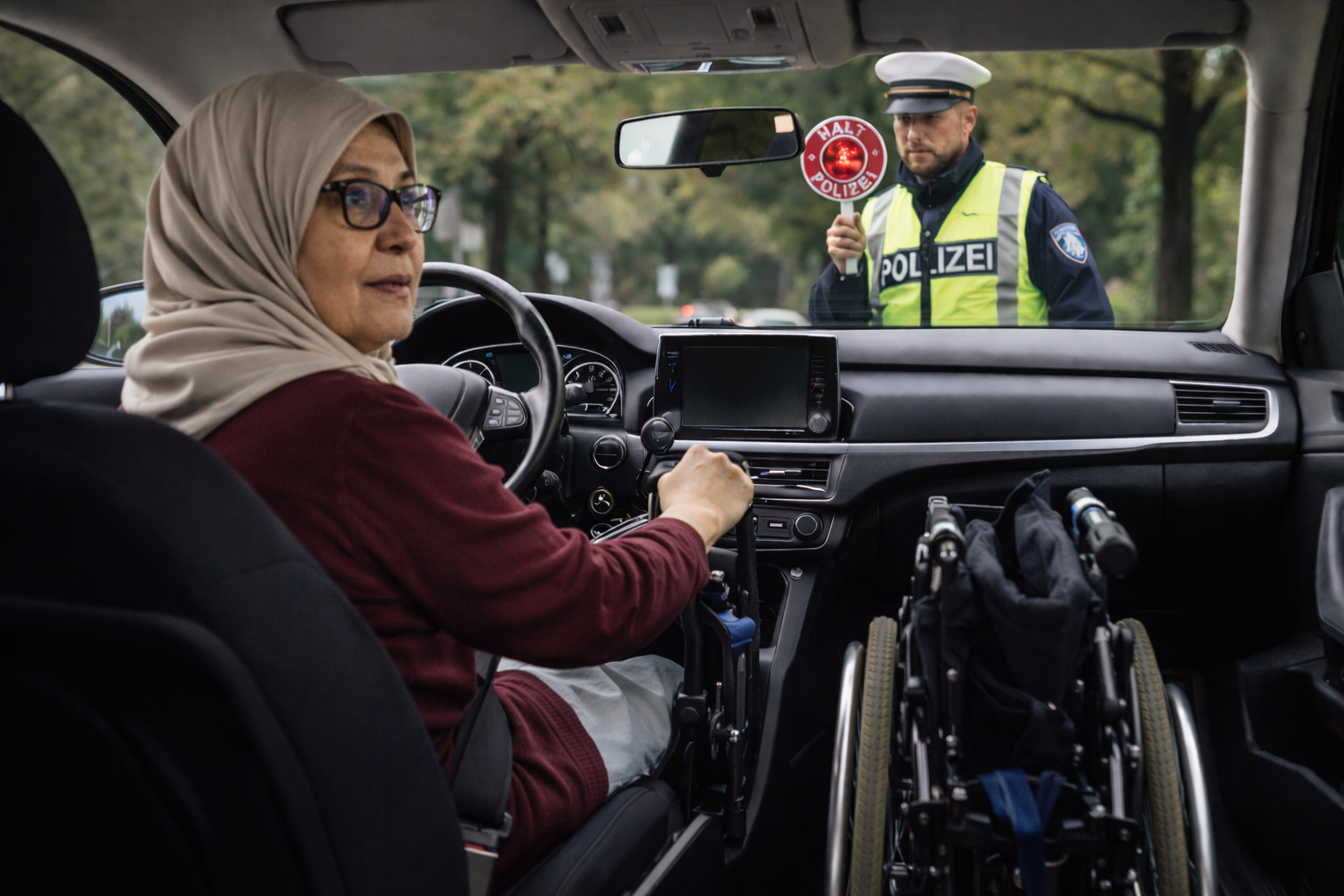
Germany's digital identity system needed to work for everyone — from tech professionals to 85-year-old first-time smartphone users. Following Microsoft's philosophy that designing for people with disabilities improves experiences for everyone, this project achieved 98/98 BITV audit criteria. This is not just compliance — it is dignity, independence, and trust embedded in every interaction.
Inclusive design was essential because this product operates at the intersection of identity, authority, and vulnerability. In government and digital identity systems, exclusion does not merely inconvenience users — it can remove access to rights, services, and autonomy.
The Challenge
Germany's digital identity system needed to work for everyone — including older adults, people with disabilities, and first-time digital identity users — while operating under strict legal, security, and delivery constraints.
The core challenge was not a lack of accessibility standards, but how those standards were adopted in everyday product decisions.
Key challenges included:
- •Accessibility risked being treated as front-end or compliance work rather than shared responsibility
- •Teams faced high delivery pressure with varying levels of accessibility maturity
- •The deeper challenge was embedding inclusive design values into team behaviour and decision-making
- •Accessibility needed to be introduced and defended from early concept stage
- •The client needed support to see accessibility as a driver of adoption, trust, and service quality
- •The role involved continuous advocacy and facilitation, not just delivery
Failure carried real consequences: exclusion from essential public services, loss of trust in government systems, and audit risk in a nationally critical product.
How do we enable teams to embed accessibility early, consistently, and confidently — without slowing delivery or compromising security?
Research Methods
The approach focused on accessibility adoption and facilitation, not enforcement.
Accessibility was positioned as a strategic factor from the outset and embedded directly into design and development workflows.
Workshop Facilitation for Adoption & End User Requirements
Cross-disciplinary workshops were facilitated to co-design accessible user journeys, bringing together:
- •Technology innovation teams
- •Domain experts with deep knowledge of government digital identity systems
- •Use case experts understanding real-world verification scenarios
- •Advisors from social organizations representing accessibility communities
These collaborative sessions enabled design decisions grounded in both technical constraints and lived accessibility experiences. The workshops functioned as adoption mechanisms—building shared understanding of accessibility requirements while simultaneously designing solutions.
Targeted Usability Testing with Accessibility Groups
Specific usability tests were conducted with target accessibility groups to validate design decisions and gather insights that would shape the final solution.
A critical finding emerged: users fall broadly into two categories—
- •Those who need everything fast and direct (power users, experienced digital natives)
- •Those who need time and supportive guidance (first-time users, neurodivergent users, those with cognitive accessibility needs)
This insight directly informed the assistant's skip-optional architecture and required careful stakeholder management.
Client Expectation Management
The solution needed to balance competing needs: an assistant focused on neurodivergent users and those needing structured guidance, while ensuring the skip option never felt like a barrier to power users who prefer direct access. This positioning required ongoing advocacy with the client to maintain inclusive design principles under delivery pressure.
Core Principles
Inclusive Design
Universal patterns designed to work across abilities, devices, and contexts
Real-World Context
Field research with police officers to understand roadside verification scenarios and high-pressure verification modes
Accessible Content
Easy Language transformation reducing comprehension errors by 73%
Assistive Technology Support
Full compatibility with screen readers, voice control, switch access, and eye tracking
Dignity-Driven Security
Secure authentication designed to preserve independence, privacy, and dignity
Key Methods
Solution
- Accessibility positioned as strategic factor: Embedded early in design and development workflows as part of overall product quality, service reliability, and public value — not as post-hoc compliance.
- Microsoft Accessibility Principles as adoption framework: Five principles (Inclusive Design, Field Research, Accessible Content, Assistive Technology Compatibility, Trust/Safety/Dignity) used to align designers, developers, stakeholders, and advisors.
- Process Design & Innovation: Development of accessibility guidelines, checklists, and QA processes establishing sustainable accessibility standards. Continuous evolution of inclusive design systems.
- Adoption Strategy & Facilitation: Consulting and advisory to government stakeholders and internal teams on WCAG 2.2, EN 301 549, BITV 2.0. Workshop facilitation with cross-disciplinary teams. Champion network enablement across UX, UI, and front-end development.
- Testing integrated as feedback loops: Manual and automated accessibility testing (VoiceOver, Keyboard, Stark) with feedback integrated into design and development, not treating testing as adoption enabler rather than gate.
- Cross-functional collaboration embedded in agile delivery: Close collaboration with UX, UI, and front-end development in international teams. Accessibility embedded into sprint rituals, reviews, and daily practice.
Delivery & Quality Assurance
Germany's first BITV-certified government app required rigorous quality assurance and coordination across multiple teams and regulatory frameworks.
Agile Coordination & Sprint Management
Close collaboration with international agile development teams embedded accessibility into every sprint cycle.
- •Daily standups with UX, UI, and front-end teams
- •Accessibility review integrated into sprint planning and retrospectives
- •Continuous testing and feedback loops during development
- •Cross-functional alignment on WCAG 2.2, EN 301 549, BITV 2.0 requirements
BIC Test Audit & BITV Certification
Achieved 98/98 BITV audit criteria through systematic preparation and comprehensive accessibility testing.
- •Coordinated preparation for external BIC (BITV Information Centre) audit
- •Manual and automated accessibility testing (VoiceOver, Keyboard Navigation, Stark)
- •Documentation of accessibility patterns and compliance evidence
- •Cross-team review cycles to address audit feedback
Accessibility Statement Development
Created comprehensive accessibility documentation meeting legal requirements for government digital services.
- •Authored public-facing accessibility statement explaining conformance level
- •Documented known limitations and planned improvements
- •Established feedback mechanism for users to report accessibility barriers
- •Aligned statement with BITV 2.0 and EN 301 549 regulatory requirements
Quality Gates & Review Cycles
Embedded accessibility into continuous integration and quality assurance processes.
- •Accessibility checklist integrated into design handoff
- •Developer review process for WCAG conformance
- •QA testing with assistive technologies before release
- •40% reduction in review cycles through early integration
**Compliance frameworks:** WCAG 2.2 AA, EN 301 549, BITV 2.0 — Germany's first government app to achieve 98/98 BITV audit criteria.
Gallery
Accessibility embedded from research to certification
Research
User interviews
Accessibility audit
Inclusive UX
Universal patterns
Easy Language
Testing
Screen readers
Voice control
BITV Audit
98/98 criteria
Independent review
Certified
Public launch
1M+ users
98 of 98 audit criteria met
Perceivable
Content is available to all senses
Operable
UI works with all input methods
Understandable
Clear language and predictable behavior
Robust
Compatible with assistive technologies
Making technical vehicle documentation understandable for everyone
Complex Legal Text
"The vehicle registration certificate (registration certificate part I) must be carried on all journeys according to §11 FZV and handed over to authorized persons on request."
Issues:
- • Legal jargon (§11 FZV)
- • Compound words
- • Passive voice
- • No visual support
Easy Language
"You need your vehicle document when you drive."
"Show it to police if they ask."
Improvements:
- • Short sentences
- • Active voice
- • Visual icons
- • 73% fewer errors
Dynamic Content Architecture
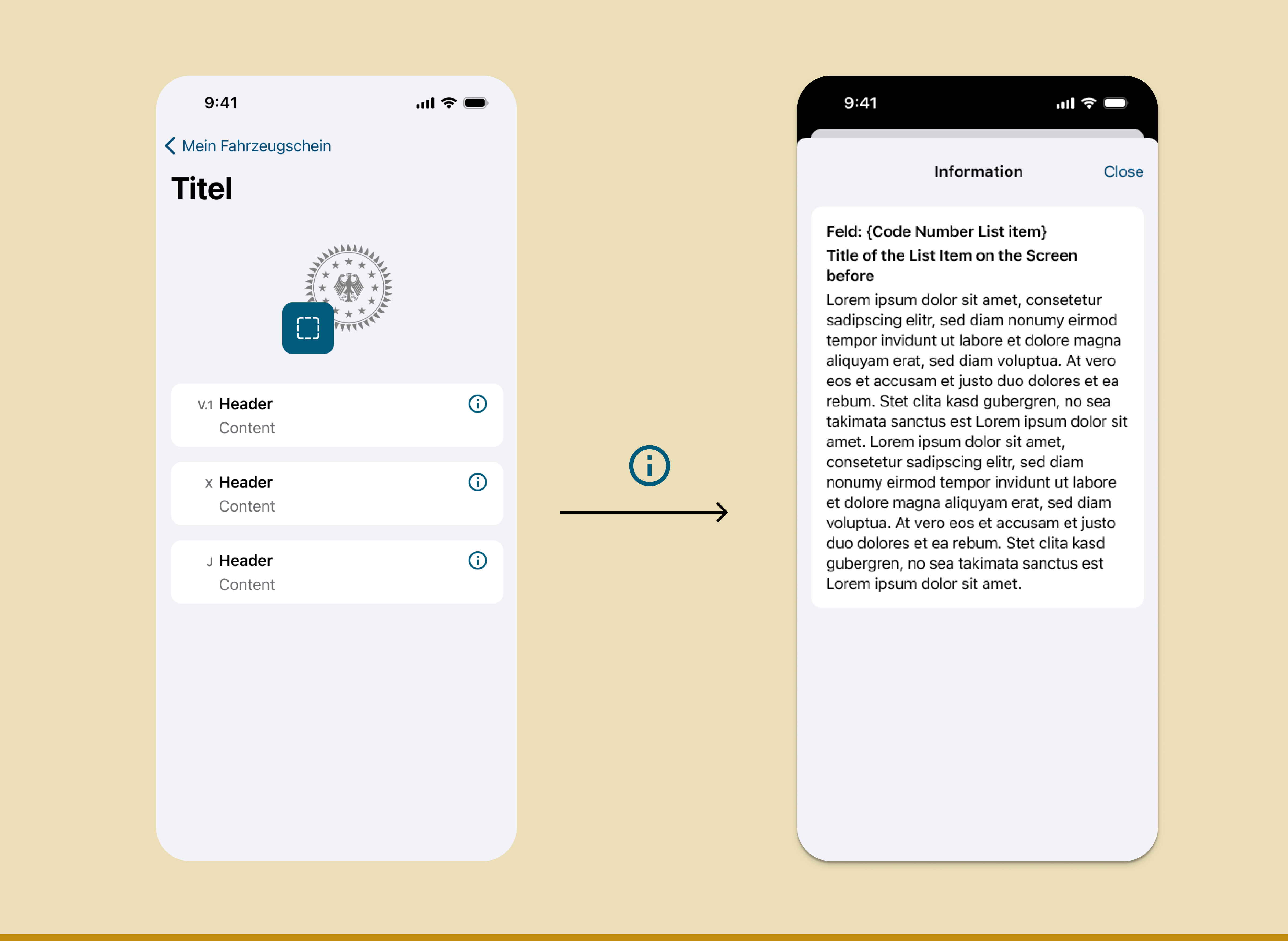
The modular screen system enables content teams to collaborate on individual text elements with subject matter experts and legal reviewers independently, while maintaining a centralized view of the complete user journey for flow validation and accessibility testing.
Neurodiversity
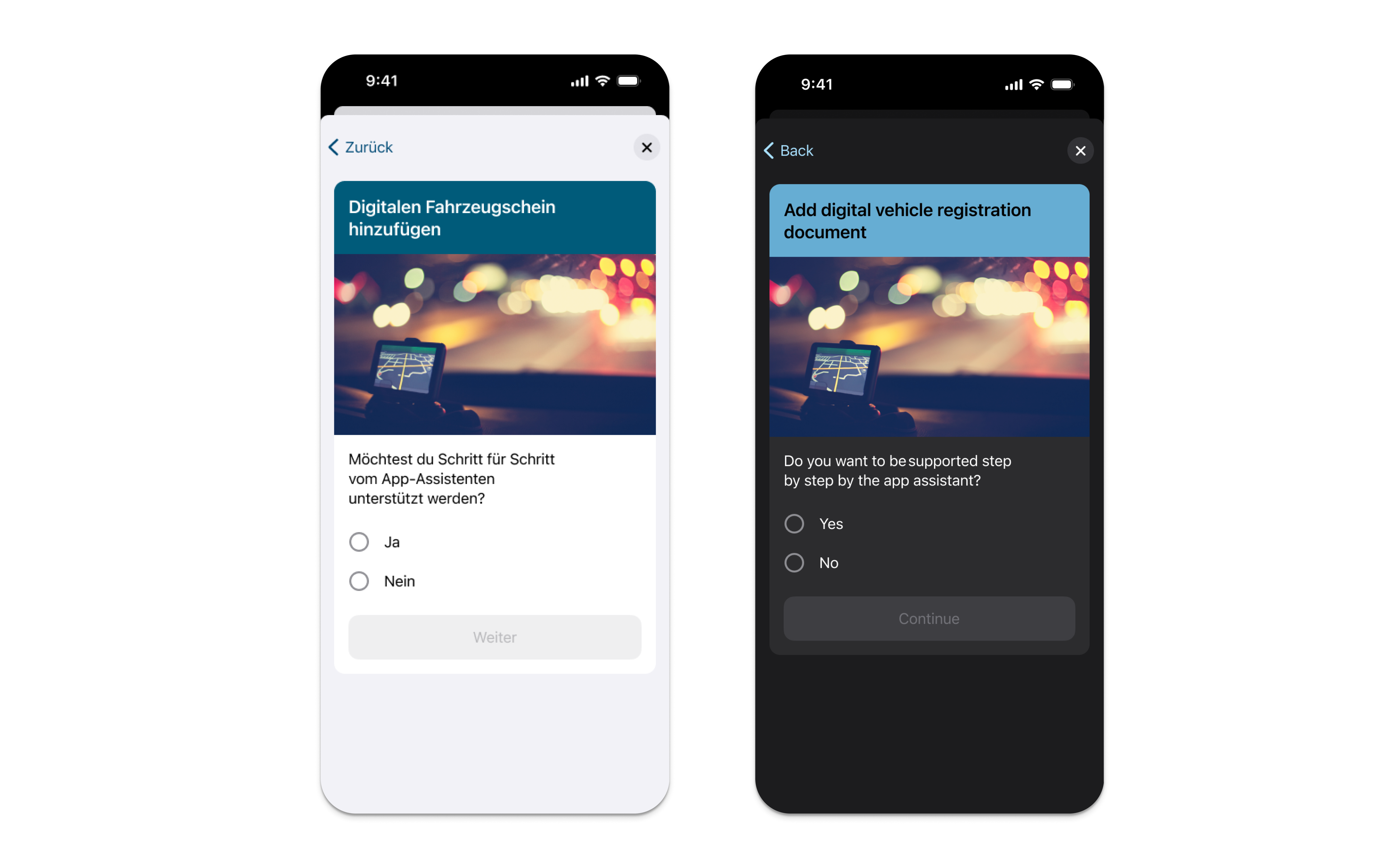
The assistant breaks down complex interactions into small, manageable decisions, helping users find and understand the controls they need—even in high-stress situations like police encounters. Users can dismiss the assistant at any time to access the full, comprehensive interface directly if they prefer.
Accessibility Assistant Flow
User
AI Assistant
Voice • Visual • Haptic
14 languages
Navigation Help
Step-by-step guidance
Context-aware tips
Error Recovery
Clear explanations
Alternative paths
Alternative Input
Voice commands
Switch control
Security without exclusion
Accessible Login
Voice patterns
Biometric options
MFA Alternatives
Picture-based codes
Audio verification
Clear Consent
Plain language
Visual explanations
Error Recovery
Graceful failures
Alternative paths
"Accessibility is not compliance. It is independence, dignity, and trust."
Outcome
Reflection
This project demonstrated that accessibility standards alone do not create accessible products. Adoption requires people, processes, and sustained capability-building.
By positioning accessibility as a strategic factor rather than compliance requirement, and by using Microsoft Accessibility Principles as a shared adoption framework, we enabled teams to embed inclusive design into everyday decision-making.
The outcome was not just 98/98 BITV audit criteria — it was the scaling of accessibility capability from 6 to 64 trained professionals, 40% reduction in review cycles, and the establishment of accessibility as sustainable organizational practice.
Accessibility adoption is infrastructure. It can be designed, facilitated, and sustained through strategic positioning, process innovation, and cross-functional collaboration.
Interested in working together?
Let's discuss how I can help your organisation design trustworthy, accessible AI experiences across sectors.