Home Work Case Studies Workshops About LinkedIn ↗ Impressum
← Back to home

Case Studies — Product Design in Practice

Real Work.
Real Impact.

A selection of product design challenges across AI, public sector digital services, health tech, and regulated technology — each with a clear problem, a process, and an outcome.

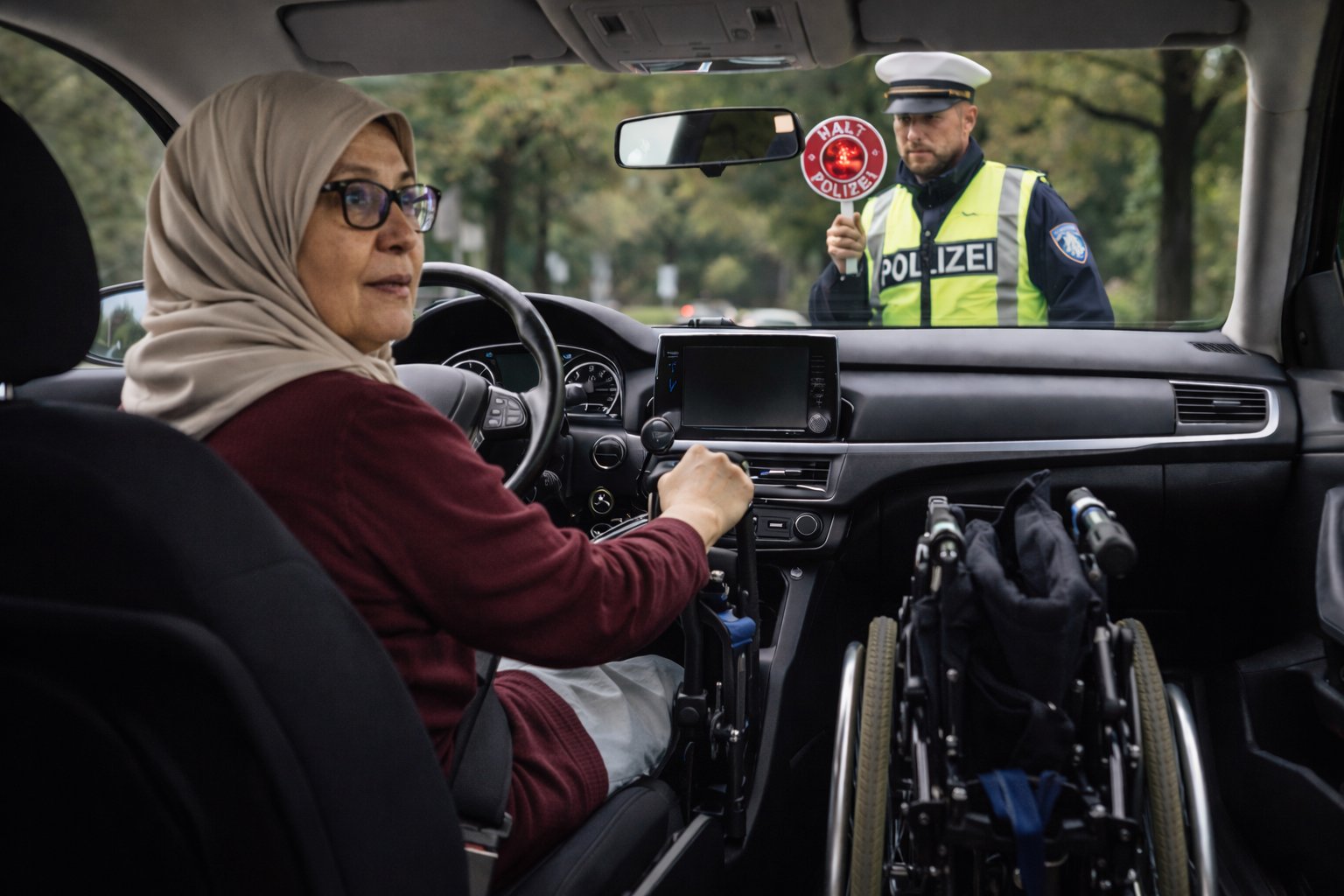
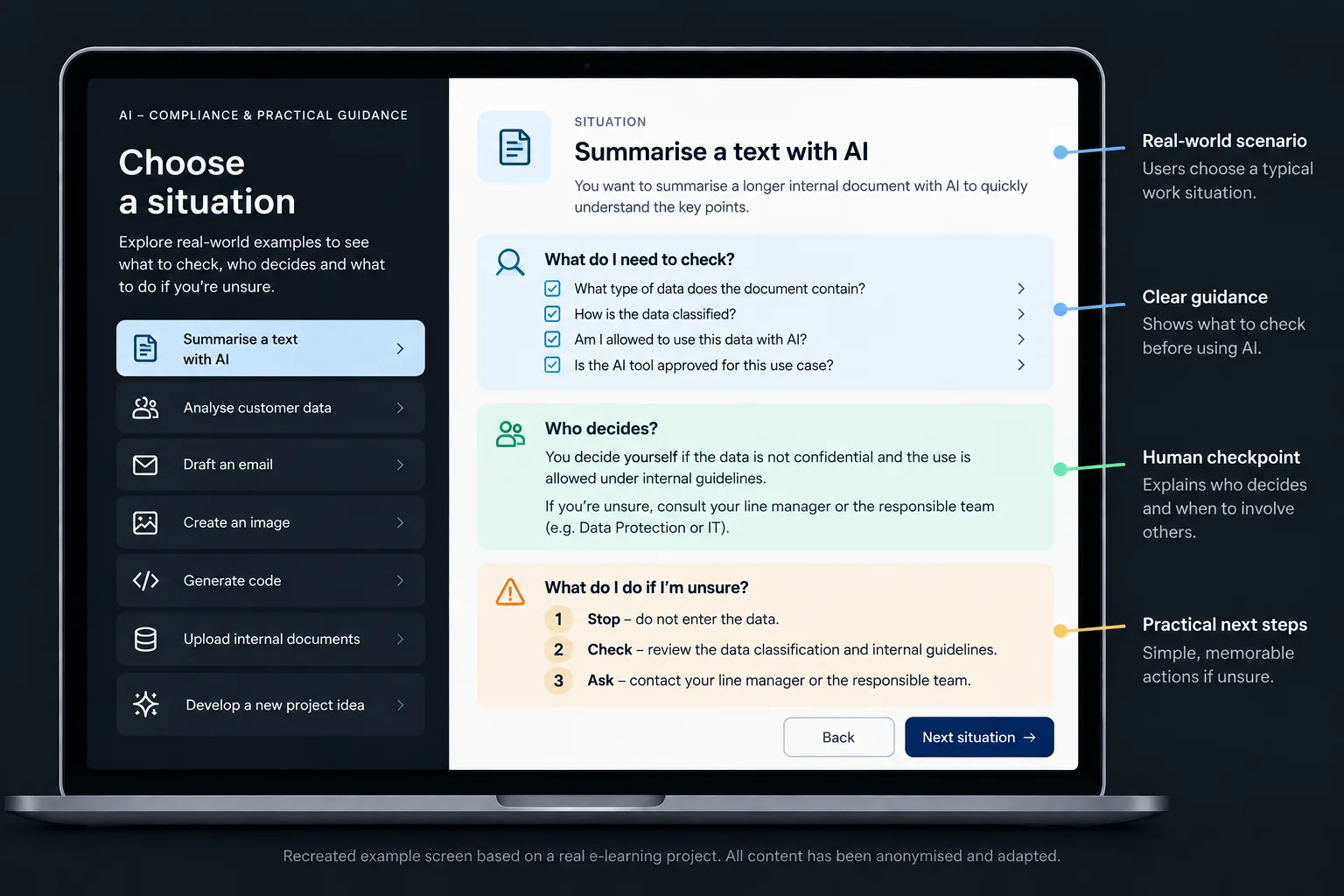
User persona — disabled driver stopped by police, needing digital ID

Research imagery — internal artefacts confidential

01 / 04 UX Research · Public Sector · AI

EU Digital Driver's Licence — UX Research

"Across the EU, digital ID apps are meant to be secure and convenient. But for many citizens — especially older adults — they feel confusing, opaque, or untrustworthy."

I used creative research methods to uncover the human, emotional, and systemic layers of digital services — especially where complexity, regulation, and trust intersect. The challenge: bridging the gap between abstract systems (algorithms, compliance rules, data flow) and real human understanding. The work included user journey mapping, paper prototyping, A/B testing and narrative flows — detailed artefacts remain confidential due to government NDA.


Research approach

  • User testing & usability studies to identify friction points and emotional cues in real-time interactions
  • Paper prototyping & narrative flows to visualise abstract systems in relatable, human form
  • Co-creation workshops to align users, designers, engineers, and policymakers around shared needs and risks
  • Quantitative surveys to map trust, usability, and comprehension across a diverse user base
  • System storytelling & visual thinking to turn invisible infrastructure into meaningful design choices

Outcome

A user-centred framework that makes complex, regulation-bound digital services feel human — trusted by the people who depend on them most.

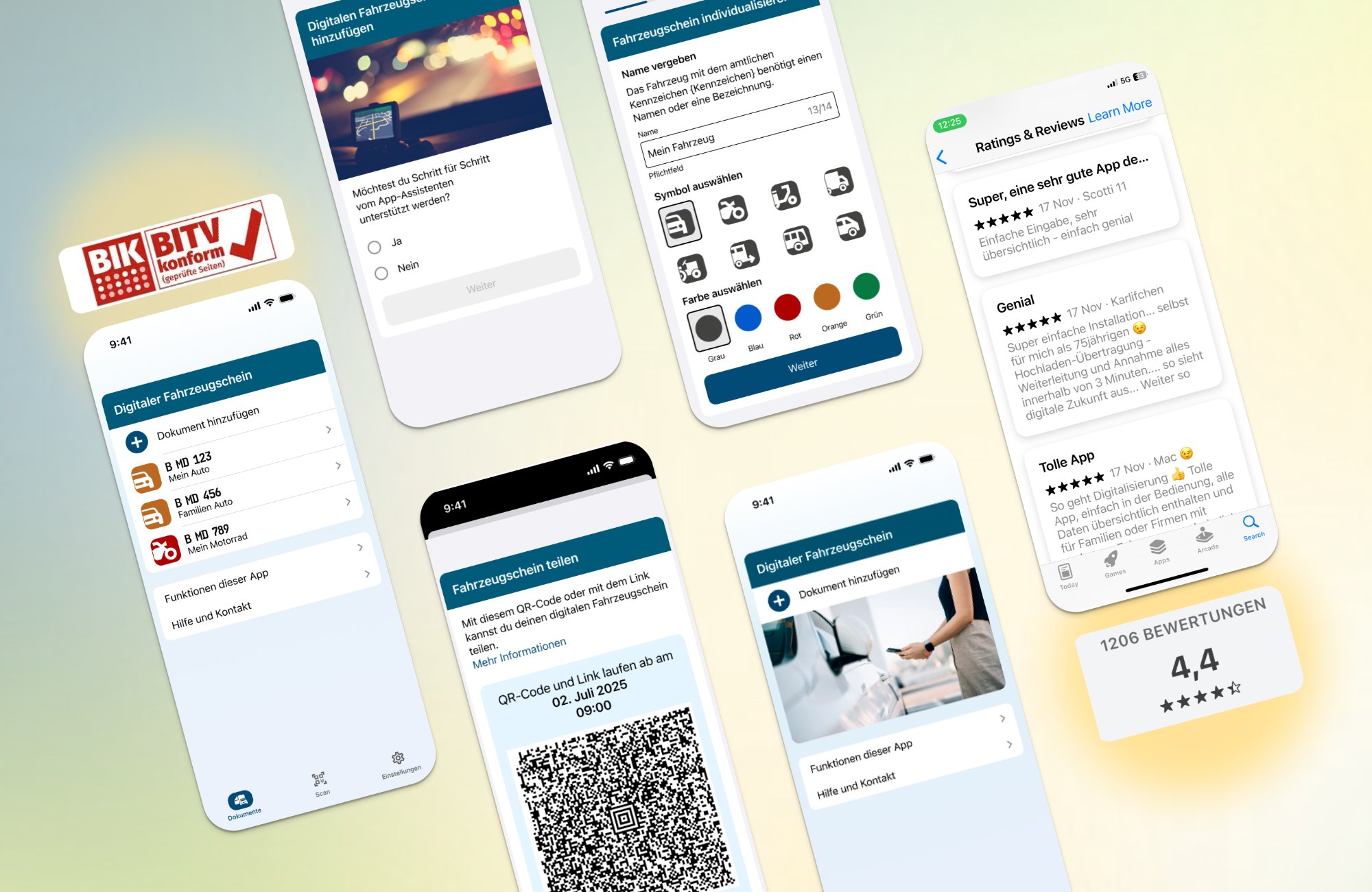
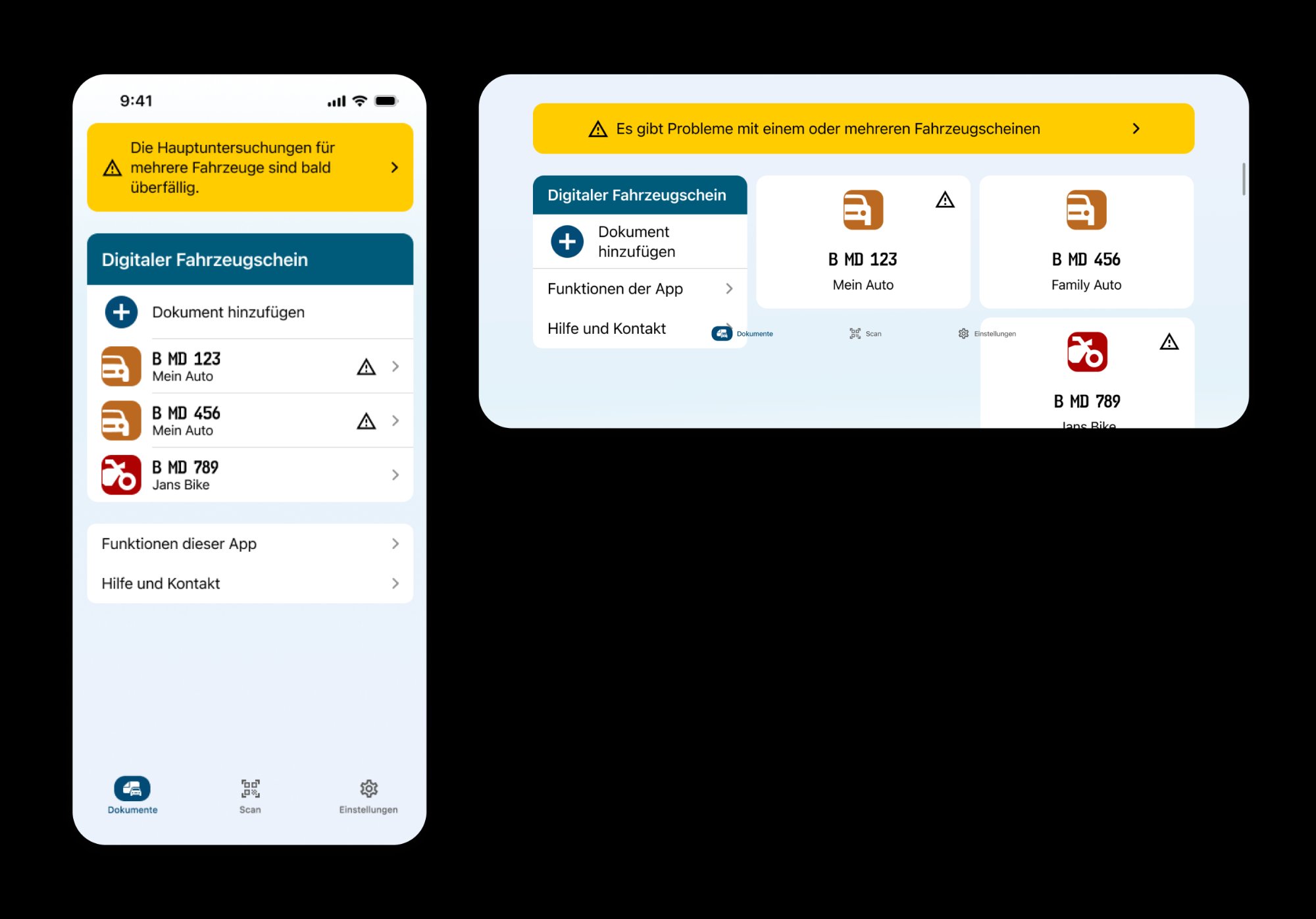
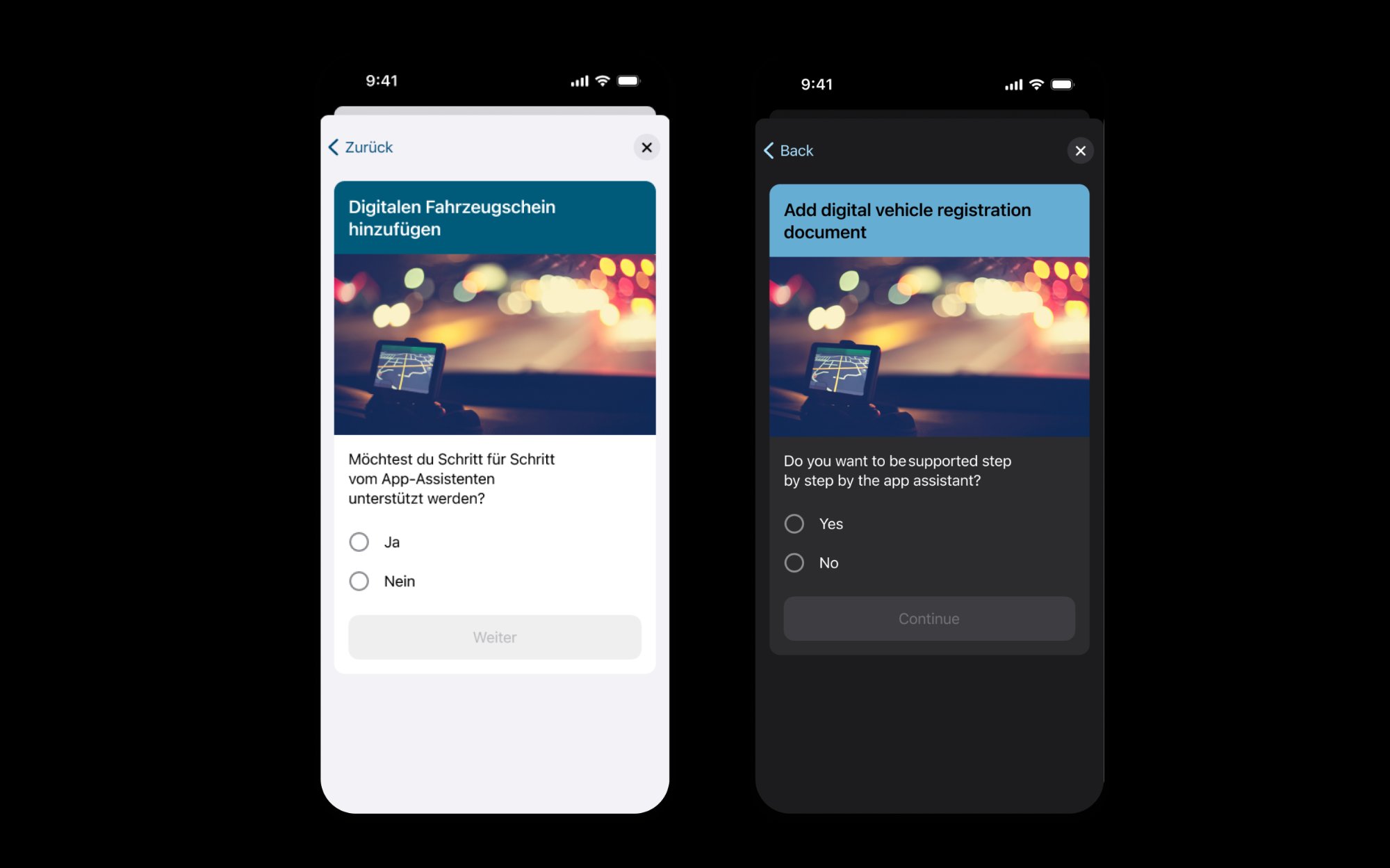
i-Kfz app collage with BITV badge i-Kfz app in use i-Kfz assistant flow
02 / 04 Product Design · Design System · BITV

i-Kfz: Native App for Digital Driver's Licence & Vehicle Registration

"Creating digital public services is like building a bike for everyone — one that works in a traffic jam, during a rainstorm, and with a flat tire."

I led UX & UI design for Germany's first BITV-certified government app — secure, native Android and iOS apps for Germany's public sector. These apps supported sensitive authentication processes, complied with accessibility standards, and required sign-off across multiple government stakeholder groups. Over 1 million downloads.


What I did

  • Concepted UX design to align user needs with business and legal constraints
  • Built and led a lean agile UX/UI team (scaled from 6 to 64 people)
  • Low and high-fidelity prototypes of a digital assistant to simplify complex registration steps
  • Lean Agile sprints and user testing to deliver practical, adaptable solutions
  • Developed personas and localisation strategies for multilingual, cross-cultural contexts
  • Built a native UI design system used across the product suite
  • Ensured full BITV compliance to make the app accessible and approvable nationwide

Outcome

Public sector apps that were secure, accessible, intuitive, and ready for national scale — Germany's first BITV-certified government app with 1M+ downloads.

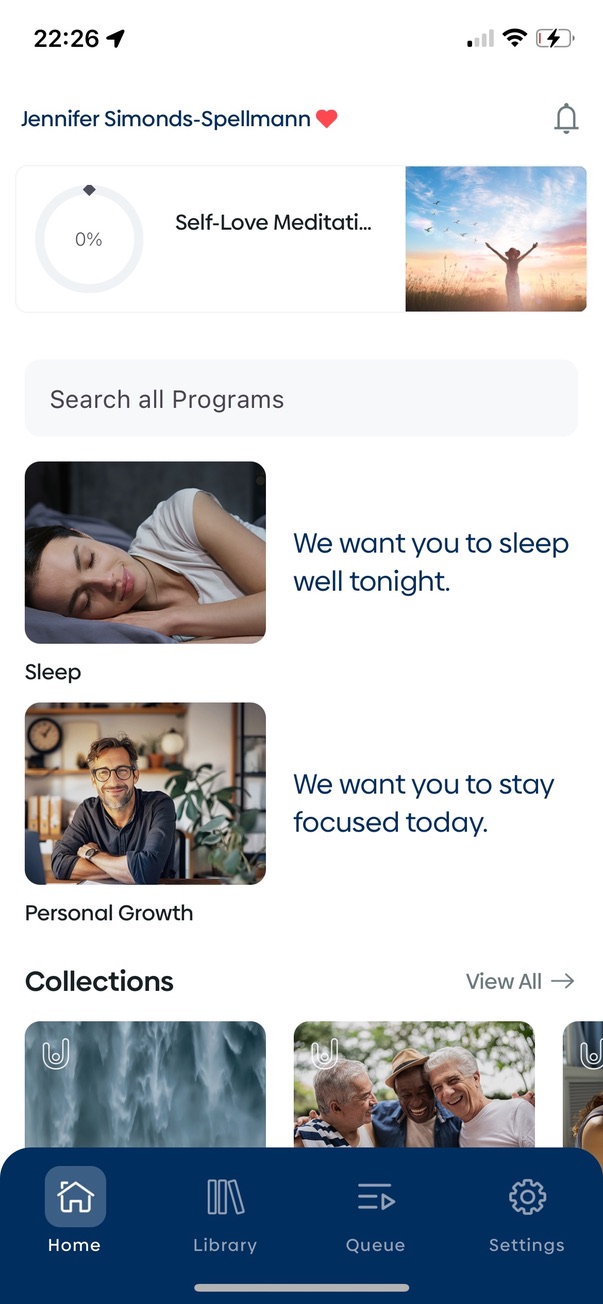
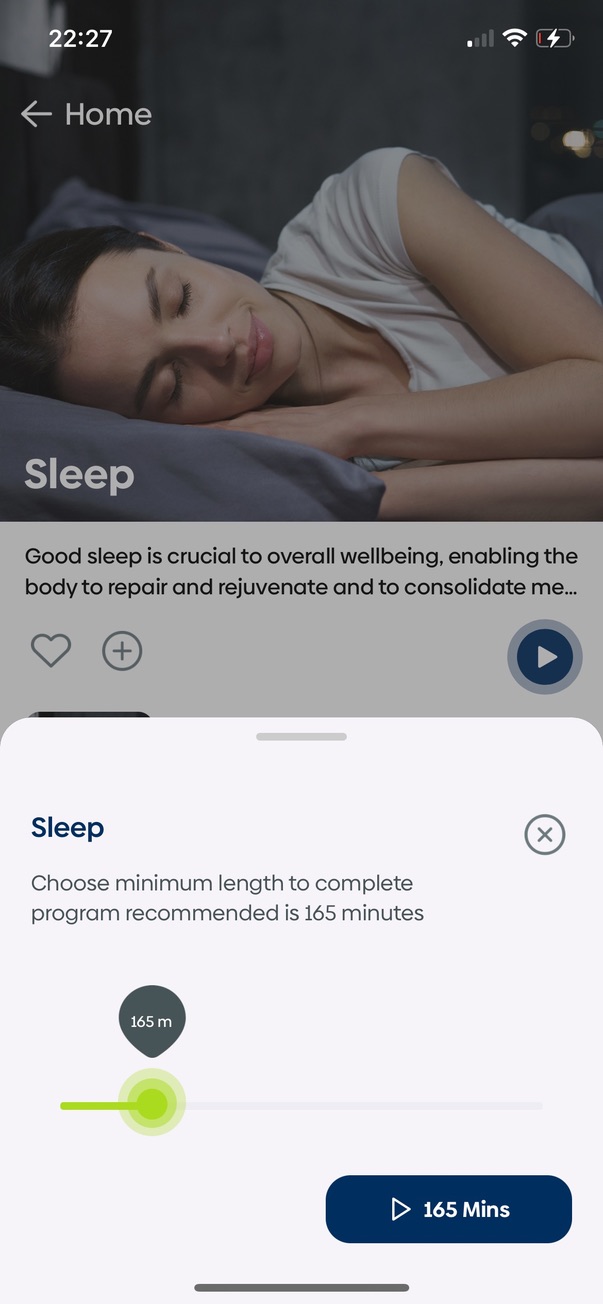
Ryse app home screen Ryse session length
03 / 04 Health Tech · IoT · B2C

Ryse — Health App with IoT-Connected Interactions

"Creating a UX strategy for a health app is like prescribing the right medicine — without a plan, you're just handing out sugar pills."

I led UX design for Ryse, a B2C health app that connects with a frequency-based IoT device to influence users' moods via biometric magnetic wave interaction. The challenge: making deeply abstract, invisible technology feel intuitive and emotionally resonant for non-technical users.


What I did

  • Ran user workshops to uncover needs and simplify abstract tech interactions
  • Created wireframes, storyboards, and high-fidelity screens for Android and iOS
  • Designed intuitive visual cues to reflect mood shifts without jargon
  • Ensured accessibility for non-tech-savvy users and maintained cross-platform consistency
  • Collaborated with developers to align UX with the device's physical capabilities

Outcome

A user-centred app that translated complex IoT interactions into a simple, engaging, and emotionally resonant experience across Android and iOS.

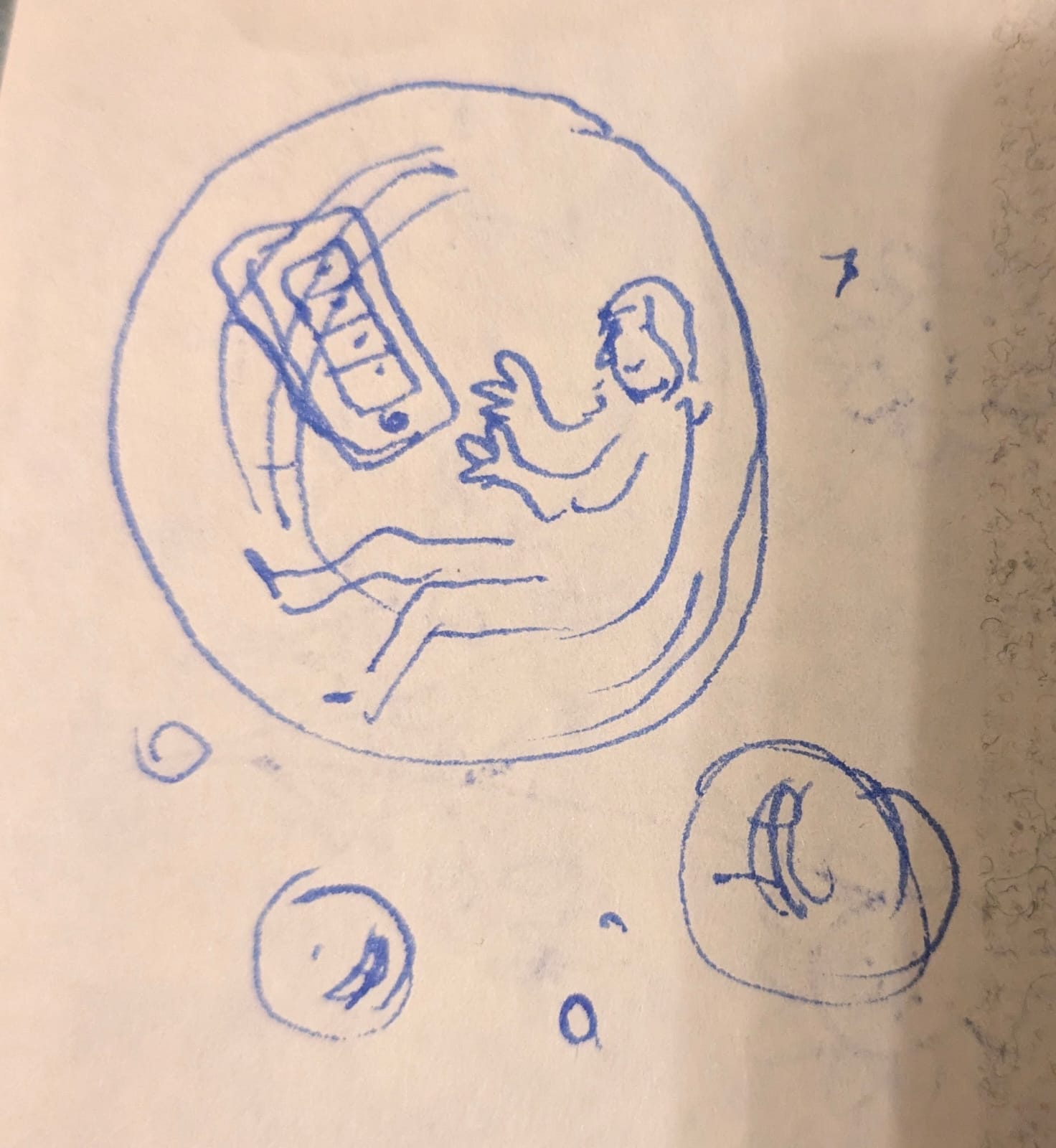
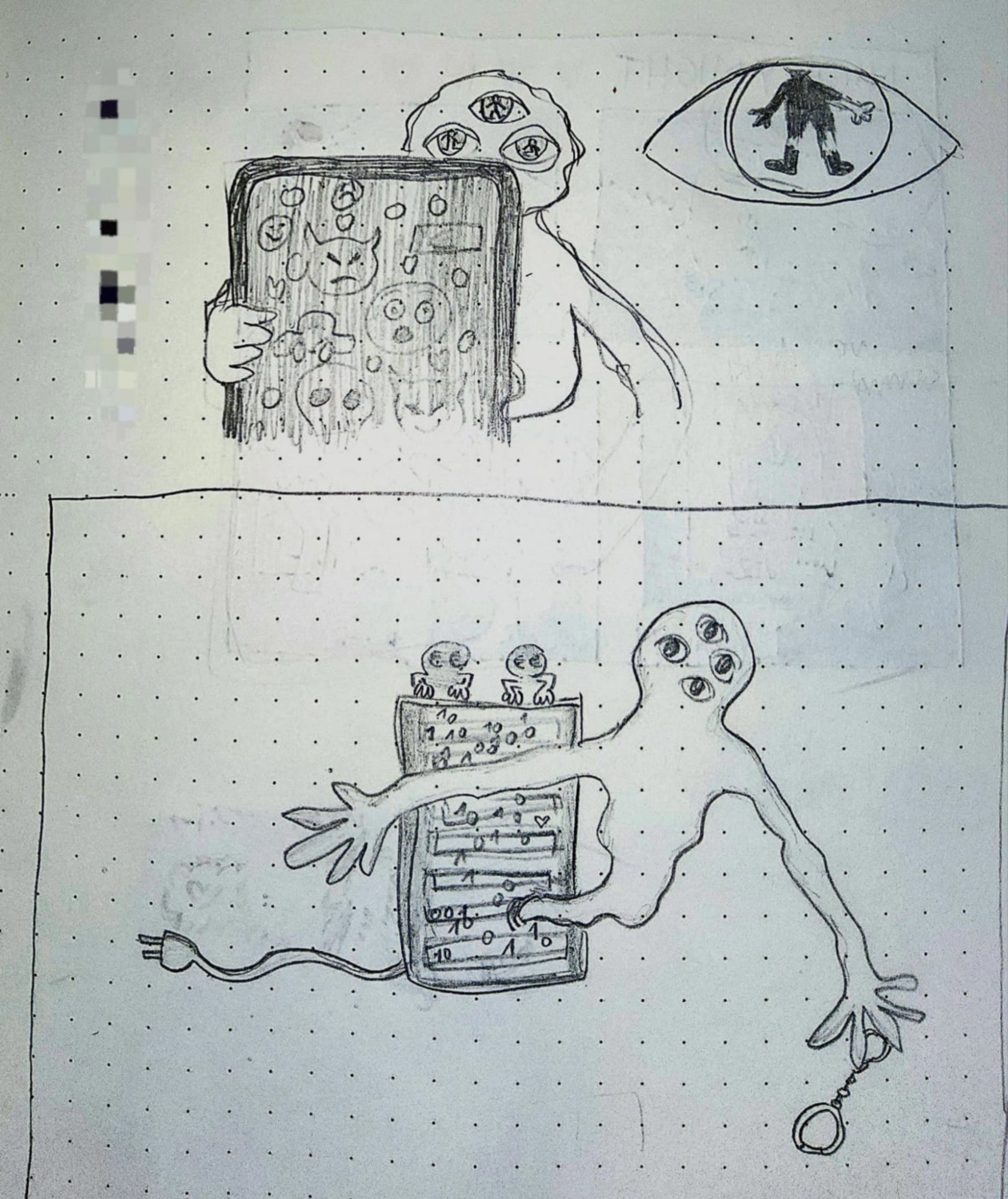
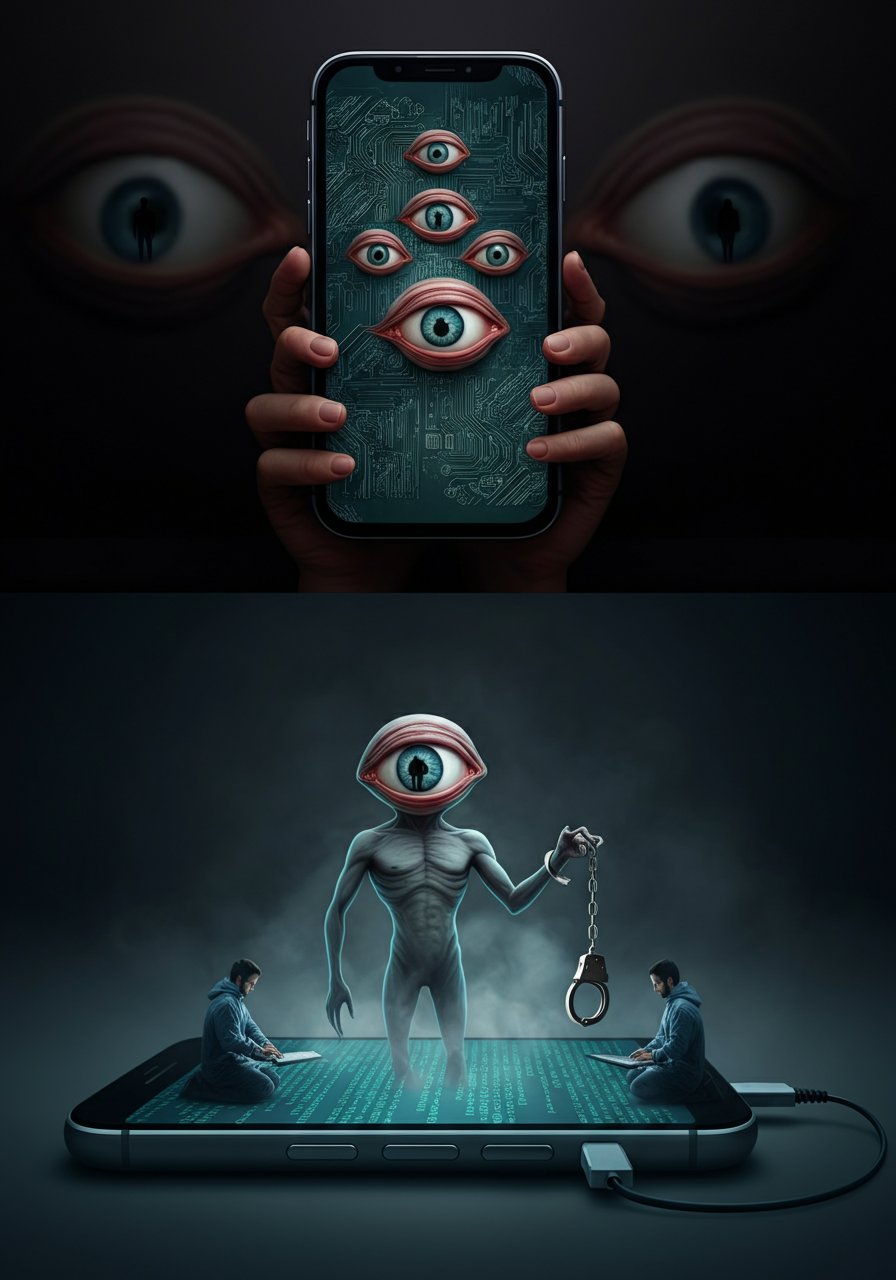
Child's drawing of algorithm as bubble AI interpretation of child's bubble drawing Child's drawing of algorithm as surveillance AI interpretation of surveillance drawing
04 / 04 Research · AI Literacy · Participatory Design

Seeing the Algorithm — AI Literacy Through Drawing

"Participants learn that algorithms are not neutral or automatic, but human-made and programmable."

As part of my MA in Design for Responsible AI, I created Seeing the Algorithm — a creative research project that helps children and young people gain AI literacy by drawing the algorithms that shape their digital lives, especially on social media. A participatory design project at the intersection of education, creative research, and AI ethics.


What we did

  • School-based workshops where participants visualised how algorithms work through drawing
  • Drawings transformed into images (and optionally t-shirts/mugs), sparking conversation at home and school
  • Self-sustaining model: funded through sales to families, no institutional budget needed
  • Building an archive of generational insight — a visual ethnography of how young people perceive programmed systems

Long-term vision

A growing archive of drawings — a visual ethnography of how young people perceive and relate to AI today. Scalable, self-funding, and grounded in real communities.

How I Research

I use creative research methods to uncover the human, emotional, and systemic layers of digital services — especially where complexity, regulation, and trust intersect.

User Testing & Usability

Identifying friction points and emotional cues in real-time interactions — with real users, not assumptions.

Paper Prototyping & Narrative Flows

Visualising ideas quickly and bringing abstract systems into relatable, human form before a single line of code is written.

Co-Creation Workshops

Aligning users, designers, engineers, and policymakers around shared needs — and surfacing risks before they become problems.

Quantitative Surveys

Mapping trust, usability, and comprehension across a diverse user base with data that supports design decisions.

System Storytelling

Turning invisible infrastructure into meaningful design choices — making data flows understandable through visual thinking.

Participatory Design

Bringing the people most affected by a system into the design process — especially when those people are vulnerable or underserved.

Want to talk
about a project?

See Workshops → About me →